Chile’s management of the pandemic has been internationally acclaimed, and has made the Andean country a benchmark in Covid-19 management. The measures adopted include the large number of tests carried out -9.7 million until March 2021, – thanks to its extensive network of laboratories, and the economic measures adopted in the form of direct aid to companies in order to mitigate the economic effects of the confinement, for a total amount of 18 billion dollars to date.
Investing in Chile
Chile’s solid economic foundation makes it OECD’s highest-ranking South American economy, According to the World Investment Report 2020 published by UNCTAD, FDI increased by 63% from USD 7 billion to USD 11 billion in 2019, sustained by investment in utilities, mining and services. FDI stocks reached USD 268 billion, a rise of more than USD 100 billion if compared to 2010. Brazil, the US, Peru and Argentina represent more than the half of the FDI stock. Investment are mainly oriented towards mining, finance and insurance, energy, commerce, and manufacturing.
Chilean economic policies, which are founded on the principle of capital transparency and non-discrimination against foreign investors, comprise one of the country’s strengths. There are 25 international trade agreements and double taxation treaties signed with 64 countries.


Science & Innovation
The recent creation of the Ministry of Science, Technology, Knowledge & Innovation in 2018 revealed Chile’s intention to overturn the country’s R&D and technology sector in order to give it greater weight in the economy, towards a knowledge based society. In these years, actions have been carried out in order to promote scientific research, expand the base of technological companies, and attract and promote scientific and technological talent. Some of the flagship initiatives are the Start Up Science program, which seeks to promote the creation of technology based companies, and the launch of the Visa Tech program, looking to attract international tech companies to invest in Chile. The promotion of STEM studies will also play a fundamental role in the scientific-technological development of Chile.
Tourism
Tourism is well positioned to benefit from Chile’s economic recovery. The wide heritage, gastronomic and accommodation offer makes Chile a country with great tourist potential in Latin America. The Chilean government has been working on initiatives to attract and facilitate the arrival of tourists from the US and Canada, such as the design of an application together with American Airlines that allows the inclusion of all the necessary health documentation to travel to Chile.

Energy & Mining
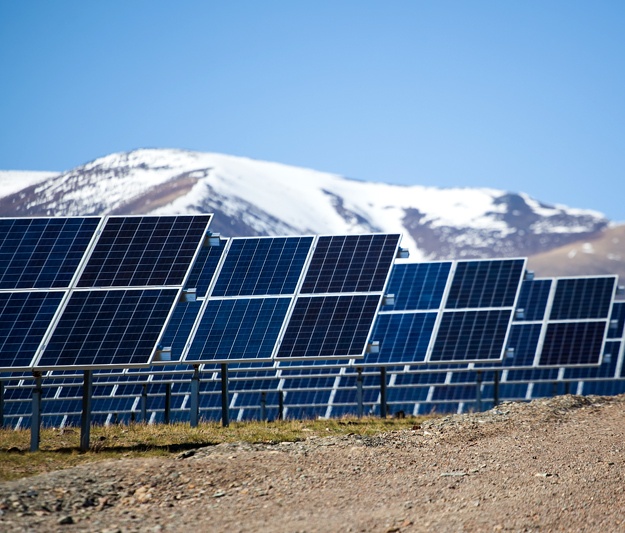
In 2015, the Chilean government launched the National Energy Policy 2050, which proposes increasing the share of renewable energies in the country’s energy mix, in order to achieve 70% of electricity consumption from renewable sources. The geographical and climatological conditions of
Chile allows this to be a country with great potential for different renewable energies such as solar, wind, hydraulic and geothermal, which are homogeneously distributed throughout the country. The Andean country is carrying out ambitious projects to continue expanding its green energy capacity, such as a new hybrid wind-solar park in Antofagasta, geothermal projects in more than 43 thousand hectares or green hydrogen plants.
Mining has been a sector with historical potential in Chile: the Andean country has 51% of the world’s lithium reserves and is the world’s leading producer of copper, with a total contribution of the sector of 10% of GDP (283 billion of dollars).
Agrobusiness
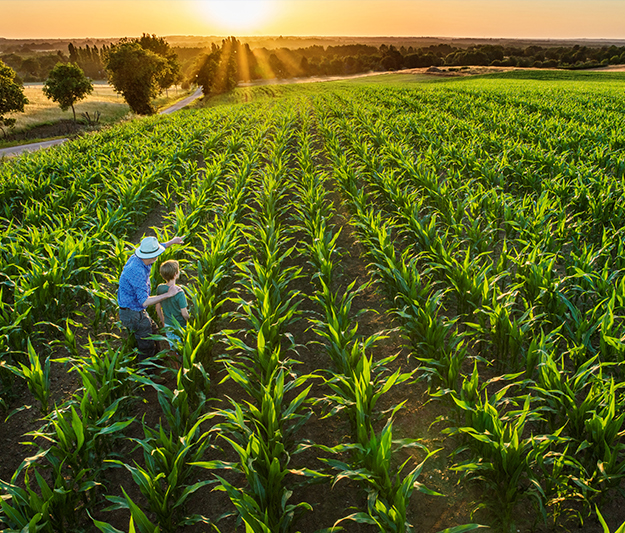
Chile has made continuous efforts to present itself as an innocuous supplier of Agriculture products. There are a number of collaboration agreements and protocols between Chile’s Food Safety departments and those of other countries that result in an expeditious process of export and delivery to Asia, America and Europe. There are no special requirements for a foreign company to acquire domestic agricultural companies. Colliers International has defined the market as ‘very attractive as a means of investment’ and the interest of investors in agricultural land in Chile has risen 70 per cent.
There are incentives for investment by foreign ownership in agribusiness through the government agency Invest Chile. There are three types of program: Todo Chile program, which promotes regional investments in Chile; Alta Tecnología program, which promotes technological investments and the Zonas Especiales program, which promotes investments in extreme regions of the country and regions with outdated production.
One of the main challenges and opportunities are in water management.

Education
Chile has some of the best high education institutions in Latin America. Students from other continents are beginning to come to Chile in larger numbers, and they all have nothing but nice things to say about life in Chile, primarily the vast variety of outdoors, and the warm nature of Chilean. In the Chilean higher education system, there are 61 universities, with over 750.000 students. Of these, 46 are accredited by the Chilean National Accreditation Commission, representing 94% of the total student registration. Universities founded before 1981, or which can be traced before that year, are known as Traditional Universities. Two Universities, Universidad de O’Higgins and Universidad de Aysén, are two public universities created in 2015, receiving their first students in 2017.
Health
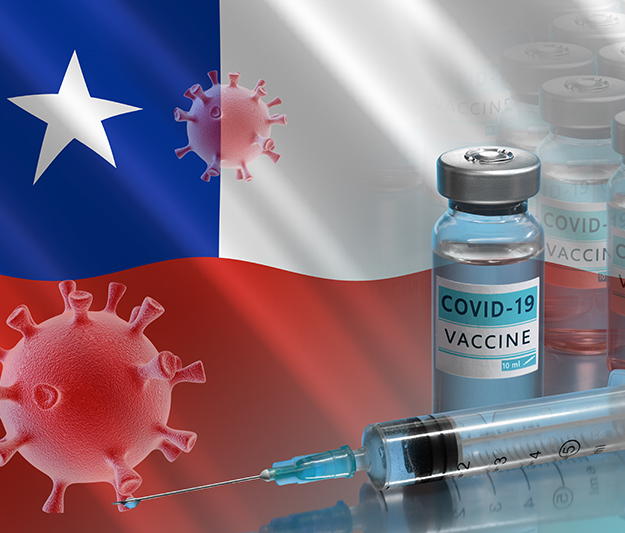
Despite the recent increase in the number of infections, Chile has managed to administer a first dose of the vaccine to more than a quarter of its population in less than a month, a milestone that only the United Kingdom and Israel have achieved to date and which has been possible thanks to the wide coverage of the national health system. Chile’s management of the pandemic has been internationally acclaimed, and has made the Andean country a benchmark in Covid-19 management. The measures adopted include the large number of tests carried out -9.7 million until March 2021, – thanks to its extensive network of laboratories, and the economic measures adopted in the form of direct aid to companies in order to mitigate the economic effects of the confinement, for a total amount of 18 billion dollars to date.
Special Feature for Newsweek
Country Reports’ special feature on Hungary will provide exclusive insights, analysis and fresh perspectives on these topics, based on our team’s exclusive exchanges with top political and business leaders.
Distributed exclusively on Newsweek.com reaching a vast readership of 45 million, our special feature will be promoted both through a banner placed on Newsweek’s homepage for a week, and a full-page article inserted in Newsweek’s international print edition ensuring large visibility and awareness for the reader. The feature on Hungary will also be hosted in the Newsweek library (www.newsweek.com/newsweek-country-reports) for two full years.